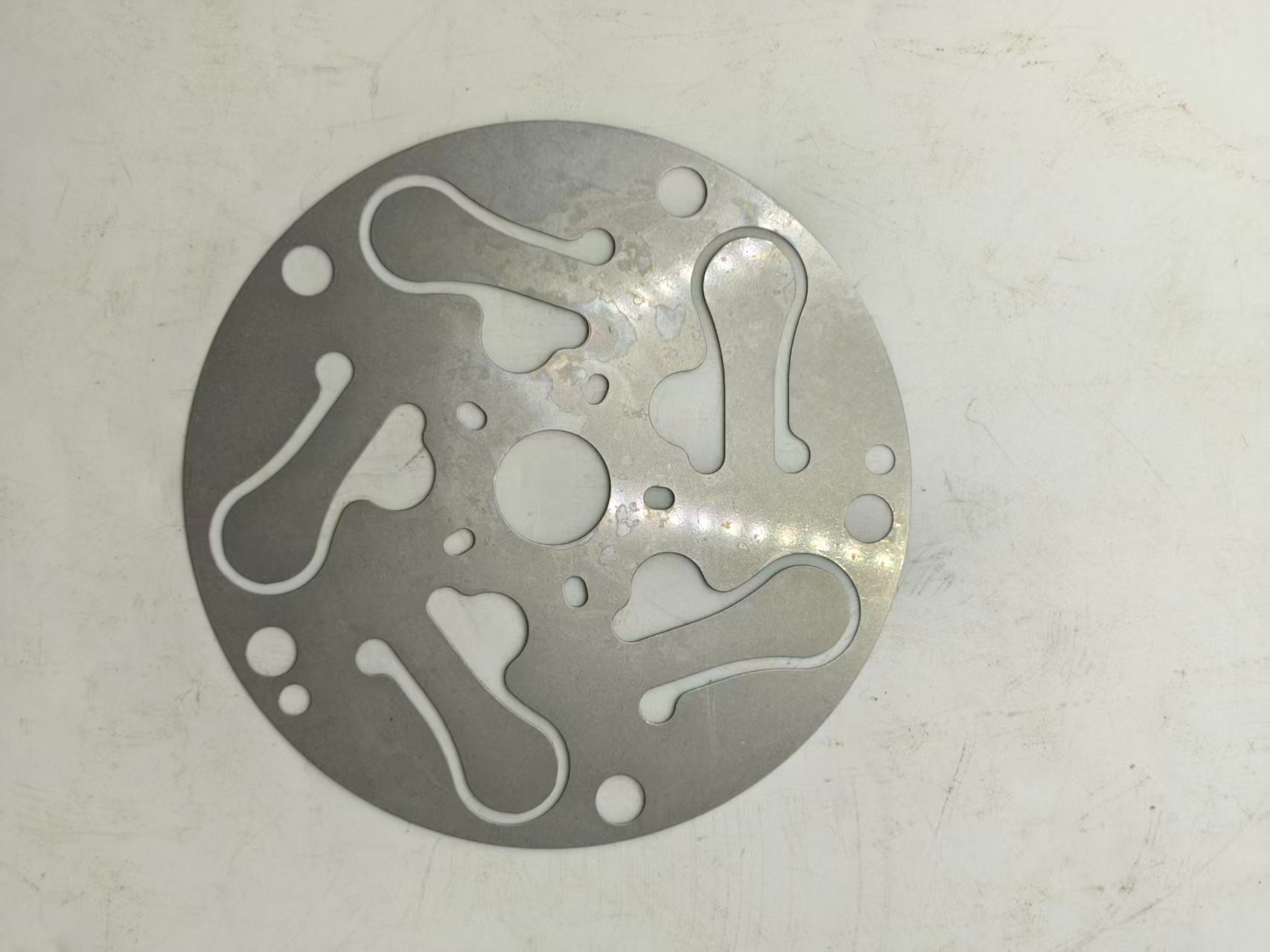
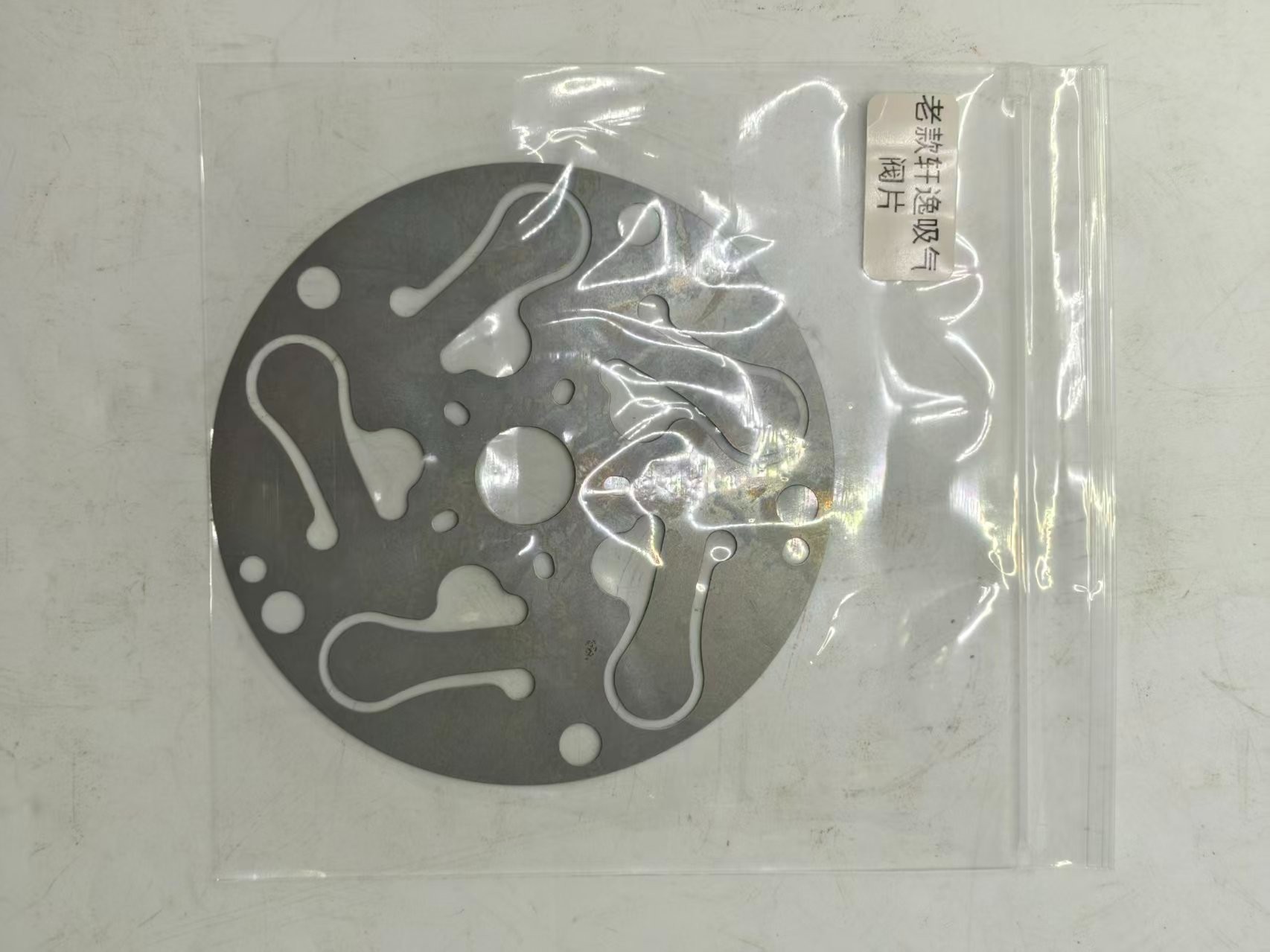
"**What this part does**
The thin spring-steel reeds are the compressor's valves: the suction reed opens to let low-pressure refrigerant gas into the cylinders on the intake stroke, and the discharge reed opens to push high-pressure gas out towards the condenser on the compression stroke.
**Where it is installed**
The Suction & Discharge Reed Valve (suction, early model) is located on the valve plate, between the cylinder block and the cylinder head.
**Symptoms of a failed reed valve**
A worn or damaged reed valve shows up as one or more of these symptoms:
- Air from the vents is only slightly cool, or cooling fades away at idle and low engine speed
- Cooling takes much longer than normal, or the cabin never really cools down
- Low-side pressure too high and high-side pressure too low although the compressor is still turning
- Abnormal knocking, ticking or rattling from the compressor when the A/C clutch engages
- The compressor cycles and chatters but cannot build pressure
- Heavy black carbon deposit or oil sludge on the reed when the head is removed
- In severe cases a broken reed lets gas blow back — the compressor stops pumping and there is no cooling at all
**When to replace**
Replace the reeds whenever the compressor is opened, when a reed is cracked, bent or missing, or when carbon build-up stops the reeds from seating properly.
**Why choose this part**
Supplied as a direct replacement for the original part. Always compare the dimensions, hole layout and finish with your original part before ordering.
**Ordering note**
Reed valves are matched to the valve plate: compare the reed outline, mounting holes, thickness and the number of ports with the original part before ordering.
"